



Have you ever seen a trio of pianists on stage playing, for example, "Bohemian Rhapsody" and Vivaldi's "Summer," the soundtrack from "Game of Thrones," and Piazzolla's "Libertango"? And not just performing your favorite melody you've heard many times, but playing it in their own unique, driving arrangement. If you answered "yes," then you've probably already been to the three-piano show Bel Suono and have already bought a ticket for their next performance.
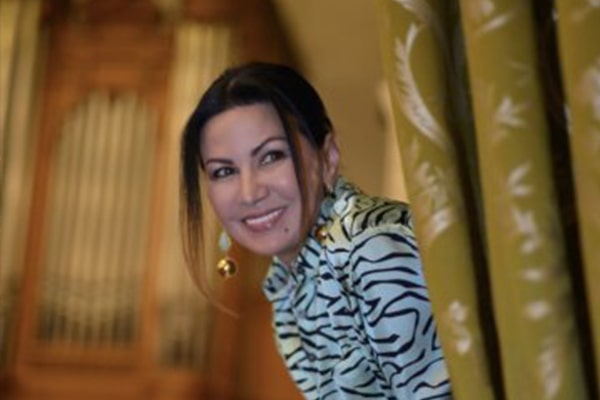
And if not, then we invite you to learn about this group, which has no analogues in the world, right now from its creator and producer, the amazing Leyla Fattakhova. It was she who, eight years ago, against the opinions of those around her, decided to bring this bold idea to life at all costs and now organizes concerts for her musicians at Crocus City Hall, the Kremlin, and beyond!

The choice is logical, because I myself am a pianist and devoted the first part of my life to learning to play the piano: music school, music college, conservatory — all the stages of a serious musical education. Three grand pianos is still a unique lineup. There is nothing like this in our country or in the world, at least I don't know of any. Of course, you could play something similar on one piano, approximately similar on two, but since I initially conceived the project as something special, three grand pianos were just right. You can't surprise anyone with one or two pianos. And my task was to do something new and original, but at the same time very high quality, so musical material was and remains fundamental for me.
We came up with the name together with associates; in the end, I suggested the variant Bel Suono — everyone supported it. From Italian, it means "beautiful sound." I had no doubt that it would be in Italian. It's very musical; all musical terminology is in Italian, and in general, whatever you say in it, even the most primitive thing, sounds beautiful. We went through many options, but when Bel Suono appeared, we understood this was it, because beautiful sound is what you always strive for. And somehow the doubts disappeared by themselves. But all my colleagues in show business said: "How could you name the group that? No one will ever understand it. It's unpronounceable!" But, it seems to me, if an artist becomes needed by someone, everyone will learn the name. Yes, in the first years, whatever they called us, but now everyone pronounces it. In extreme cases, they just say — three pianos. Because there are no other three pianos!
The pianists of Bel Suono are Kirill Gushchin, Vasily Opalev, and Anton Mosenkov. They are wonderful young men who graduated with honors from the Moscow Conservatory, one of the best music universities in the world. They are all completely different, but very talented and attractive. That was my goal from the start. I love everything beautiful and believe that on stage a person should bring something that people would want to reach for, something that would somehow adorn our lives. Unkempt and untidy pianists have always repelled me a bit and distracted from the music. So all the musicians in Bel Suono are handsome, but no one has canceled high professional skills either: they all have brilliant command of their instruments, are all laureates of international competitions, all compose, improvise, make transcriptions — in short, they work to the fullest.
[Leyla Fattakhova]If the concert hall in the city we're going to has three acoustic grand pianos, we are incredibly happy about that; we travel calmly, light. But this is rare. Even in large halls, as a rule, two grand pianos is already good, because often there's only one. But even if there are several, they might be in different conditions. Therefore, to be safe, we usually bring our own digital grand pianos. These are modern, highly technological instruments, different in connection, but no worse, and in some ways much more convenient: they don't need tuning, they are more compact and easier to transport. It is partly thanks to their existence that our project exists. Yes, they sound a little different, but only a specialist might notice. And in general, in the crossover genre we work in, digital grand pianos reflect the time we live in: speed, technology, possibilities.
For all compositions in our repertoire, we do our own arrangement. If a viewer wants to listen to how it's written in Bach's sheet music, they won't hear that. We take the original and completely rework it: we create our own sound, our own arrangement, our own transcriptions for three grand pianos, because they don't exist in principle, and we present it as a new dish in an original sound. Classical music itself, without a doubt, is beautiful, but it is accessible to a very narrow circle: even musically educated people don't always understand all the subtleties of classical music. Our presentation shortens the distance, and often simply removes the barrier between people and classical music, opens the door to the world of beautiful music, and brings many back to playing music.
We play in the crossover genre, but we don't limit ourselves. We even tried singing. In the first lineup, there was a popular song, "Te Quiero," in all the charts at the top positions. I even had a split personality — what to do, which path to take: go into pop or stay in the instrumental genre. In the end, I settled on the initially chosen path because I wanted to do something of my own. The main thing is not to set any limits for yourself. And nowadays, it's a time when people do several things simultaneously. So I'm not ruling out that we might do something with a vocalist, or sing ourselves again, or recite some rap. We also play jazz. If we started with the classics, now we have tango from "Scent of a Woman," covers of the soundtrack from "Game of Thrones," Maroon 5, ABBA, Michael Jackson, "Bohemian Rhapsody," and so on. Who knows, maybe tomorrow we'll do a rock cover, redo Metallica — I'm all for experiments.
There is a sound producer who handles only the music, and there is a producer who handles organizational aspects: from image to promotion. And there is a multi-tasker, like me, a producer-promoter. I not only think about how the music sounds and how the artist looks, but also how to organize and sell it. Naturally, at big concerts, like at the Kremlin, for example, or at Crocus, there is a team: director, lighting designer, sound engineer, and so on, but besides the artistic component, there's also the complex part of advertising and ticket sales. Now the team consists of 10-12 people — that's the permanent staff. Plus, we have an orchestra with which we've been collaborating with great pleasure for the last two years.
We tried different orchestras, played with many, but somehow with the Moscow State Symphony Orchestra conducted by I. Rudin, we developed a relationship, an understanding of each other. The orchestra is an important part of our life, as all our big performances take place with them. On tour, we always travel with our own band: a drummer, a bass guitarist, and a keyboardist. Our keyboardist creates the entire palette of orchestral sound if there's no orchestra. The drummer and bass guitar always play. I'm happy we have them all. I think someone else will join this team soon because we are always searching, trying different formats, and growing.
With radio and television, it's complicated. There are practically no radio stations of our format. Radio JAZZ or Relax FM, for example, are too calm for us. Getting on television is also difficult: on Channel One or Russia-1, we're not at home because we're too classical, and on the "Kultura" channel, we're too pop. I used to be sad about it, but now, frankly, I'm happy. Now, fortunately, there is the internet. I will gladly develop our channel. When we started promoting ourselves on various internet platforms, on social networks, and when we got millions of views, we realized that now we don't need anything else. I've completely stopped striving for television.
Because we are not widely exposed, some mystery remains; people want to come and see us at a concert. They see our concert numbers, videos, hear music on our channel, and, of course, they are interested in seeing what it looks like live. By the way, even world stars, like Taylor Swift or Beyoncé, don't show their concerts on TV. If you want to watch them, you have to buy access on some paid resource.
We had only one hope — concerts, and that's harder. If a viewer comes to a concert, paid for a ticket, and suddenly doesn't hear what they expected, they will never come again, or worse, might leave halfway through the performance, and that would mean we shouldn't come back here anymore. And that's why it's so valuable to hear people shouting "bravo" after almost every piece, or starting to applaud so much during "Carmen" or Vivaldi that it feels like the guys are performing some popular song. At concerts, emotions run high for us and the audience alike. After performances, people also write: "I haven't touched an instrument for 10 years, but now I bought myself keys. You brought back my love for music." This is the best praise and the most important thing for any artist.
The viewer who comes to the concert and votes for you with rubles is the key to your success. It means you will come here again, people will come to see you and will continue to love you. But you must be sure to surprise them with something else next time: bring a new program, a new show, a new presentation, somehow transform yourself. The element of novelty must be present. Right now, we are going to some cities for the second or even third time and happily bringing the new Kremlin program "The Magic of Three Pianos" and a new album!
I remember it very well. We had a concert at Crocus City Hall, and it was a big shock for everyone — Bel Suono filled Crocus! And it was a shock for me too. Two months before the concert, when very few tickets had been sold, I was thinking of canceling it because I wasn't sure we would have a sold-out show. Then Borya Serkebaev, my dear friend, the head of A-Studio, came to the rehearsal, went into the hall, and asked how things were going, and I replied: "Sold out! There will be a full house here tonight." And he said to me: "Who are all these people? It's impossible!" It turned out it was more than possible: we had our own public, our own listener and viewer! Borya said very kind words then, rejoiced for us. He is one of those who witnessed the birth of our project, always supported me, from our first concert in the small hall of the House of Music. I used to work as an artist manager at the Soyuz studio and handled the group A-Studio, was their manager, and we've had warm friendly relations since then. And at some point, the time came when I no longer needed to support A-Studio, but A-Studio needed to support us.
Every year we have more and more tours, both in Russia and abroad; for the last 2-3 years we've been traveling a lot, performing actively. The first 5-6 years we survived, created material, built a name for ourselves. It was a difficult period, and the lineup changed. Many don't wait for the moment when they start earning money, especially since my group is male, some start families, they need to be fed. This is a very difficult moment when you must unconditionally believe in what you are doing, that it will eventually bring you money, fame, and dividends. Of course, I understand everything and don't blame anyone. But that makes the guys who are now in our group even more valuable. They experienced a very difficult period; we achieved success together, and I really want them to live to see worldwide recognition. We have already conquered the coolest hall here. The Kremlin is a very high bar. Many artists, flickering on TV from morning to night, have never performed a solo concert at the Kremlin in their entire career. And these three young handsome men undoubtedly conquered the Kremlin. Yes, we had different times: difficult and most difficult — and sometimes it seemed to me that nothing would work out, especially when everyone around said I was crazy. But for everything, you need patience, you need faith.
Next — only forward and upward! The Kremlin — 6000 spectators, like Crocus. That's a lot! And both at Crocus and at the Kremlin, I was initially worried that there wouldn't be some kind of intimate connection with the artist, because the piano implies a shorter distance between the viewer and the performer, but nothing of the sort. At the concert in the Kremlin, I felt like I could sense everyone sitting in the balcony. In terms of energy, it was one of our best concerts, because even the Kremlin old-timers told us what an amazing audience we had. Now we want to pay more attention to our own, original music; I think we will have several original premieres, most likely at Crocus, next spring. We are preparing a new program, a new level. And in 2021, we will be 10 years old, and we will be preparing a large-scale show for that occasion. I hope to celebrate this anniversary again at the Kremlin or maybe aim for some arena.
We already have many programs and five albums; we are currently working on the sixth. At the Kremlin, about seventy percent of the program was new, from our latest album. We didn't have the right not to perform the remaining thirty percent — those are things the audience knows and loves. Before that, a year and a half ago, we were at Crocus City Hall, also presenting a new album, but even then we couldn't do without "Libertango" and Vivaldi. Soon at the conservatory, there will be a program featuring masterpieces of world classics in original arrangements by Bel Suono: Bach, Beethoven, Mozart, Ravel, Grieg, Rossini, Borodin, Prokofiev, Rachmaninoff, and many others. And in winter at the House of Music, we will present a different program — a Christmas, magical one — fortunately, over 8 years we have accumulated a huge program and have something to show! We have viewers who come to every one of our concerts and want to hear something new. For them, we always have some kind of premiere.
This can be a very sad story when you finish music school, college, conservatory, maybe postgraduate studies, and become a performer, but remain unclaimed. Only a few get concert contracts. They are winners of major competitions, unique prodigies, or those who are very lucky. The majority go to teach at music schools, accompany, work as concertmasters. Some move to another genre or leave the profession altogether. It's very difficult to realize oneself. If you graduated from the conservatory in violin or wind instrument, you have a chance to work in an orchestra; vocalists might have a theater, some kind of choir. This is not always the desired path, but at least some realization. And pianists in this sense are the loneliest people. If you don't become a major performer, then, as a rule, either change your profession, or accompany someone or teach. So our project is a chance for talented guys.
The goal is to make new beautiful music, conquer new halls, win the love of audiences in new countries and new continents! The halls should get bigger and bigger and cooler; I hope someday there will be the Albert Hall and Carnegie Hall. In any case, that's our goal. And in general, I have this rule: each of our previous concerts should be a little worse than the next one. The level must constantly rise!


